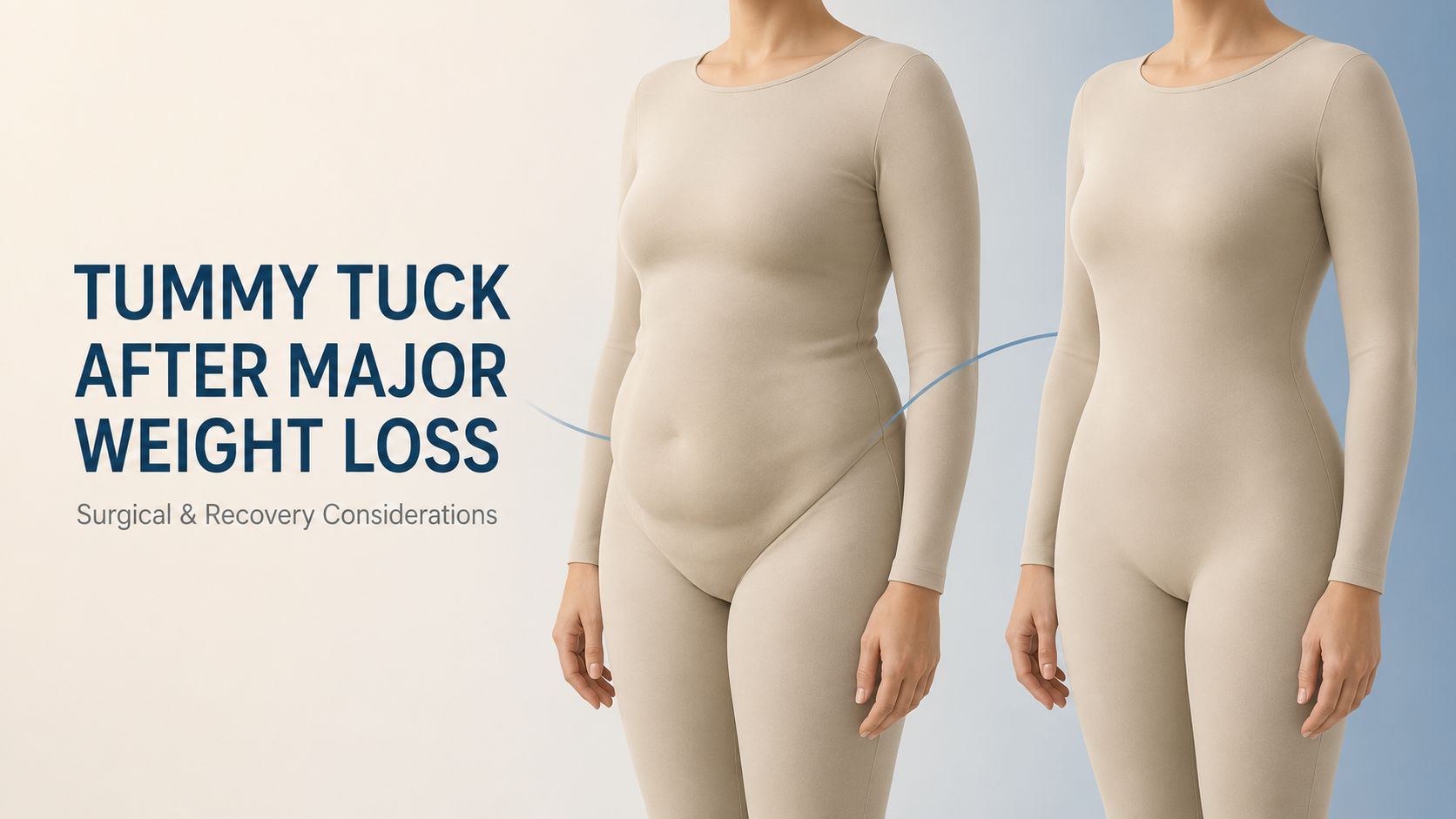

Losing a substantial amount of weight can improve health, mobility, and daily comfort, but the skin does not always contract at the same pace as the body beneath it. The abdomen is one of the areas where this difference can be most noticeable. Loose skin may fold over the lower abdomen, affect how clothing fits, and conceal the shape achieved through weight loss.
A tummy tuck can address some of these concerns, but surgery after major weight loss is not the same as a standard cosmetic abdominoplasty. Skin laxity may be more extensive, nutritional factors can affect healing, and recovery may require additional planning. Understanding these differences helps patients approach surgery with clearer expectations.
Page Contents
- Why the Abdomen Changes After Major Weight Loss
- A Tummy Tuck Is Not the Same as Further Weight Loss
- Choosing the Right Type of Abdominal Contouring
- Nutritional Readiness Deserves Particular Attention
- Risk Assessment May Differ After Major Weight Loss
- What Recovery Can Involve
- Results Develop Gradually
- Planning the Procedure as a Complete Journey
Why the Abdomen Changes After Major Weight Loss
After significant weight loss, skin may have limited ability to retract, particularly when it has been stretched for many years. Age, genetics, pregnancy history, sun exposure, and smoking can also influence elasticity.
Some people develop a hanging fold of skin, often called an abdominal apron, while others have laxity that continues around the waist and flanks. There may also be separation or weakness of the abdominal muscles. Examination is needed to identify which tissues contribute to the shape and which aspects of the shape surgery can realistically improve.
A Tummy Tuck Is Not the Same as Further Weight Loss
Abdominoplasty is a body-contouring operation rather than a method of reducing overall body weight. It removes selected excess skin and fat from the abdomen and may tighten the abdominal wall when this is appropriate. The procedure can create a smoother outline, but it does not replace nutrition, physical activity, or ongoing weight management.
This distinction matters after major weight loss because some patients begin researching surgery while their weight is still changing. Operating too early can make the result less predictable. Additional weight loss may create new laxity, while weight regain can place tension on the tissues and alter the contour. Surgeons therefore usually look for a weight that is close to the patient’s realistic long-term goal and has remained reasonably stable before finalising a plan.
Choosing the Right Type of Abdominal Contouring
There is no single tummy tuck design that suits every post-weight-loss body. The operation must be matched to the location of excess skin, the condition of the abdominal wall and the patient’s priorities regarding scars and contour.
A traditional tummy tuck removes tissue from the lower abdomen, repositions the remaining skin and creates a new opening for the navel. An extended tummy tuck continues farther around the sides to address the hips and flanks. A panniculectomy focuses mainly on removing the hanging lower abdominal fold and may not include muscle repair or upper abdominal contouring. When laxity continues around the torso, a lower body lift or staged plan may be more appropriate.
The wider the area treated, the longer the scar is likely to be. For many patients, accepting a more extensive scar is part of gaining a more balanced contour. This trade-off should be discussed openly.
Nutritional Readiness Deserves Particular Attention
Healing places increased demands on the body. Patients who have lost weight through bariatric surgery may have reduced intake, altered absorption or deficiencies that are not obvious from appearance alone. Those who have lost weight through medication, diet or illness can also reach surgery with low protein intake or other nutritional concerns.
Pre-operative assessment may include a review of eating patterns, supplements and relevant blood tests. Protein status, anaemia and nutrients such as iron, vitamin B12, folate and vitamin D may be considered depending on the patient’s history. Deficiencies are better identified and addressed before surgery.
Patients should also disclose all medicines, weight-loss treatments and supplements. The surgical and anaesthetic teams need this information to decide what should be continued, adjusted or paused. These decisions should be individualised.
Risk Assessment May Differ After Major Weight Loss
Every tummy tuck carries risks, including bleeding, infection, fluid collection, delayed wound healing, scarring and blood clots. After major weight loss, stretched tissue, previous abdominal operations, current body mass index and nutritional status may influence the risk profile.
Nicotine is especially relevant because it restricts blood flow and can interfere with skin and wound healing. Patients who smoke, vape or use nicotine products may be asked to stop well before surgery and remain nicotine-free during recovery. Conditions such as diabetes, anaemia and uncontrolled cardiovascular problems also require assessment and optimisation.
Combining several large body-contouring procedures can lengthen the operation and make recovery more demanding. In some cases, separating treatment into stages is the safer and more practical approach.
What Recovery Can Involve
Recovery depends on the extent of the procedure, whether the abdominal muscles were tightened and whether other areas were treated at the same time. Dressings and a compression garment may be used, and temporary drains may be placed to remove fluid from beneath the skin. Patients need clear instructions on wound care, drain management, medication and the warning signs that require medical attention.
The abdomen can feel tight during the early stage, and standing upright may be uncomfortable at first. Heavy lifting, strenuous exercise and movements that place tension on the incision are restricted. Help at home is important, particularly for anyone caring for young children or doing physical work.
Rest does not mean remaining completely still. Early, gentle walking is commonly encouraged to support circulation and reduce the risk of blood clots. The plan may also include compression and preventive medication according to the individual’s risk assessment. A more extensive procedure may require a slower return to normal activity.
Results Develop Gradually
The abdomen will initially be swollen, and the incision may appear firm or raised. Contour and scar appearance continue to change over the following months, while numbness, pulling sensations, and uneven swelling can occur during healing.
A tummy tuck can improve proportion and make clothing or movement more comfortable, but it cannot create perfect symmetry or erase every sign of previous weight change. Scars are permanent, and some residual laxity may remain outside the treated area. Ageing, pregnancy and future weight fluctuations can also affect the result. Satisfaction is more likely when the goal is meaningful improvement rather than an idealised or digitally edited body shape.
Planning the Procedure as a Complete Journey
Good preparation extends beyond choosing a surgical date. Patients should understand the proposed incision, whether muscle repair is planned, how long they may need assistance, when follow-up appointments will take place, and who will manage concerns after they leave the surgical facility. For people travelling abroad, the plan should also account for the length of stay, mobility during the journey home and access to follow-up once they return.
Clinics experienced in supporting international patients, including MCAN Health, can help candidates review their weight history, nutritional status, surgical options and recovery arrangements before travelling. Anyone considering a tummy tuck in Turkey after major weight loss should look beyond the operation itself and assess the full pathway, from medical evaluation and procedure planning to follow-up once they return home.